Walking Accountability Group App: Keep Your Step Routine Social
Make walking easier to repeat with friends or a public community
A walking accountability group works when members choose realistic personal targets, post simple check-ins, and encourage consistency rather than competing over one universal step count. Start with a one-week routine, keep body data private, and use a smaller walking option for busy or low-energy days.
Why walking routines fade when nobody notices
Walking is simple to understand but still easy to postpone. Weather, work, travel, and low energy can interrupt the routine, and one missed day can quietly turn into a missed week.
A group adds a visible return point. It can be friends you already know or a public community centered on walking. The goal is not constant surveillance; it is knowing where to check in when the next walk is complete.
How to create a walking accountability group
1. Choose a flexible shared purpose
Use a purpose such as “help one another walk consistently this month.” Avoid requiring the same distance, pace, or step count from everyone.
2. Let members set personal targets
One person may choose three 20-minute walks, while another uses a step target or a shorter accessible route. Personal goals make the group more inclusive and the comparison more meaningful.
3. Define what counts as a check-in
A step total, completed-walk note, or simple reaction can count. Members should not need to reveal weight, measurements, progress photos, exact routes, or live location.
4. Create a bad-weather option
Plan an indoor route, a shorter movement break, or another appropriate alternative. A backup removes the need to renegotiate the entire routine every time conditions change.
5. Use short challenges carefully
Try “three walks this week” or “check in on four days.” Optional consistency challenges are usually fairer than awarding one winner for the highest raw step count.
6. Review after one week
Ask whether the target was realistic, whether check-ins helped, and whether notifications were useful. Adjust the system before increasing the goal.
Private group or public walking community?
A private group works well for friends, relatives, or coworkers who already trust one another. A public group can help when nobody nearby shares the routine or when you want more activity and encouragement. Before joining, preview the group description, member count, entry rules, and tone.
Use the online support group safety guide before sharing progress with people you do not know.
Track walking together with Fit Together
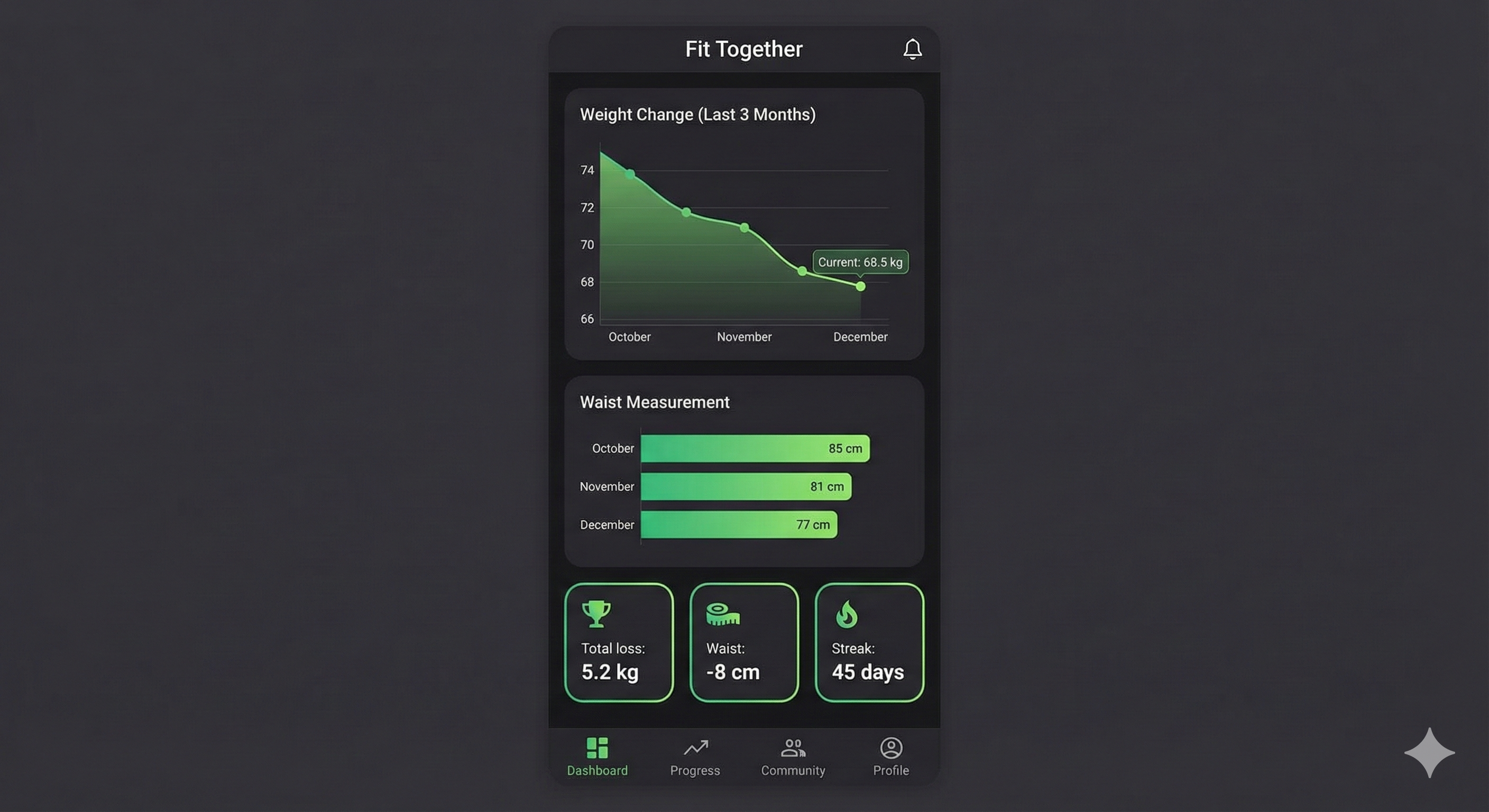
Fit Together's walking accountability group app supports step tracking, personal progress history, public and private groups, reactions, rankings, and optional challenges. Members can keep individual targets while using the group as a shared place to return.
Frequently asked questions
Does everyone in a walking group need the same step goal?
No. Members can use personal targets and share whether they completed their own planned action.
How do you keep a walking group motivated?
Use brief check-ins, recognize consistency, offer a smaller option for difficult days, and run short optional challenges.
Can I join a walking group without sharing my weight?
Yes. Walking accountability can focus on steps, walks, or completed actions without sharing weight, measurements, or photos.
Give every walk a place to land
Track your own progress and stay connected to a group that helps you return.
Explore Fit Together →